Over the past year, I’ve been working on a funded project with
University College London as part of the Trellis Arbor Arts programme
In collaboration with the neuroscience researcher Lianne Keighery. Together we are Touch & Trace - the tactile artist that is me, and 'trace' of neuropathways from neuroscientist Lianne. Within the project, we worked with two community groups, Castlehaven Community Centre and Traumatic Stress Service. Each community group with lived experiences of trauma and/or PTSD.
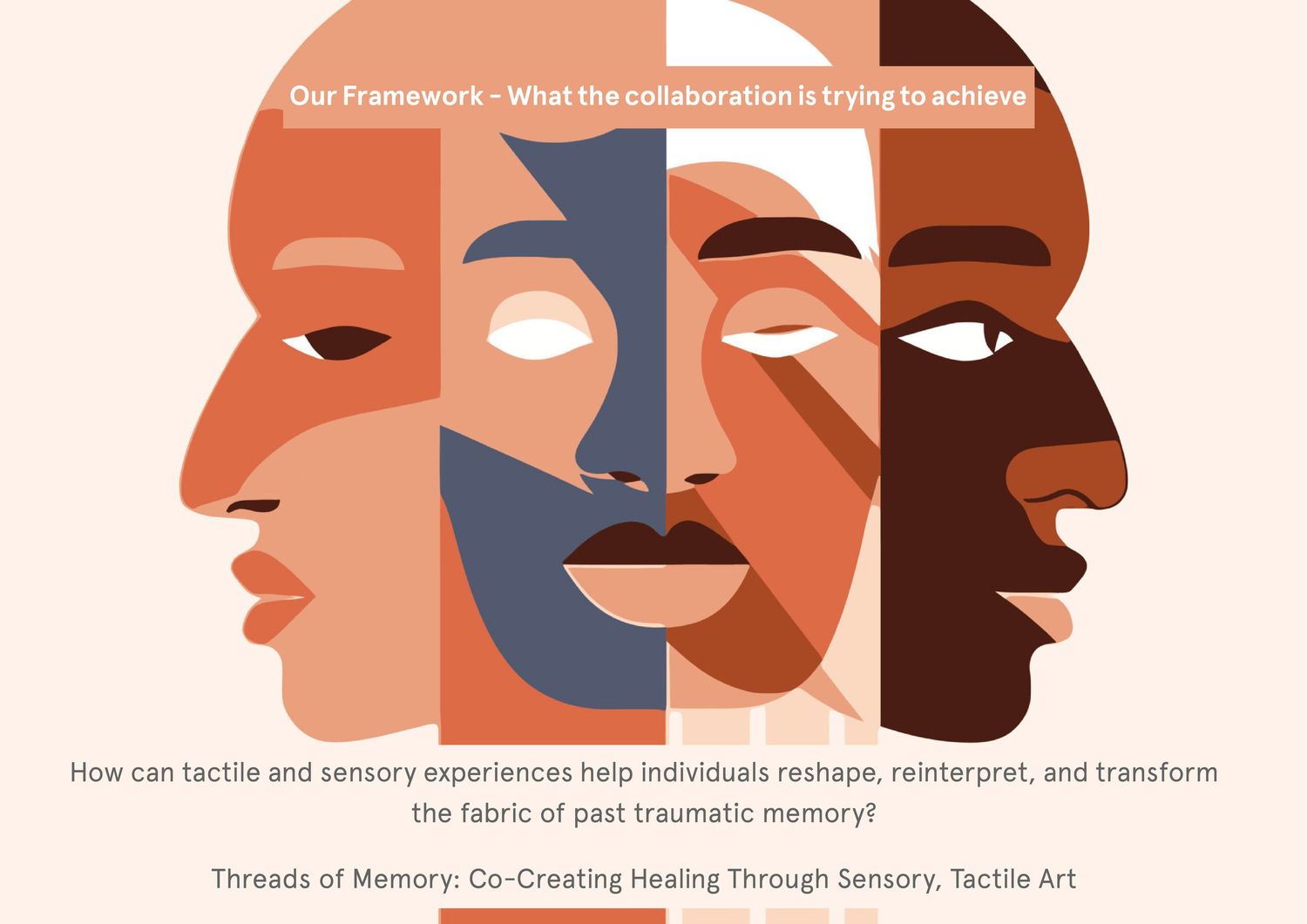
At the heart of the project explores a simple but powerful question:
How can tactile, sensory experiences help reshape and transform traumatic memory?

Where it began..
Globally, 70% of people experience a traumatic event, with 5.7% of adults in the UK screen positive for PTSD, but not everyone has access to supportive, non-clinical ways of processing it, states Priory. Trauma can often feel fixed, like something held tightly in the body. Looping, repeating, difficult to shift.
Neuroscience tells us something different. Lianne’s research into memory reconsolidation, started from the knowledge that memory isn’t static. When revisited in the right conditions, it can become malleable, open to being reprocessed, softened, and reshaped.
The challenge for our collaboration became:
How do we make this knowledge accessible, felt, and human?
How do we create those conditions outside of a lab?
In the next post, I’ll share how art and neuroscience came together to begin responding to this question.


